
Inside the Elite: A Veteran’s Look at Life on a Hotshot Crew
From Hotshot
by: John Buckley
We finally complete the successful burning of our section of line and get the welcome word to spread out and hold our area. For the first time since before dawn, we take a good break, digging into our bag lunches and whatever tidbits that we stockpile in our packs for hungry moments.
Our rest is suddenly cut short. “Line out! Let’s go! They’ve lost the fire further down the line!” Stuffing sandwiches in our mouths as we struggle back into our packs, we march double-time for ten minutes on down along the next crew’s newly built fire line toward the problem spot.
Sure enough, the fire’s making a hot run out into a brushy flat saddle where strong winds are pushing flames almost horizontally along the ground. The forest crew we’ve followed down looks busy with a small flashy spot fire nearby, so we haughtily pass them by and speed toward the much bigger escaping slop-over. When we’re still hundreds of yards away, I can hear Hotshots ahead of me grumbling with scorn about “worthless blue-card crews,” and as we reach the fire area, I quickly understand why.
Almost forty firefighters are standing helplessly by as the fire burns its way further out into the sage and brush field, spreading rapidly out of control. Four or five of them are futilely flinging dirt with shovels from way too far away from the flames to be doing the least bit of good, and the rest seem totally confused.
Without even a word our twenty-person crew marches right through their midst and out into the path of the flames. Chainsaws roar to life, cutting brush that’s passed back and tossed into openings. Running in and out of the gagging smoke and roasting heat, we attack the hot spots with a savage disdain. In, then out, then in, holding our breath until our lungs feel like bursting from the strain. One bush in front of me flares up, then all those nearby also catch, shooting flames toward my hips and shoulders and driving me back, gasping for fresh air. But Denny and Nell and Paul join me in another attack, coordinating their efforts with well-flung dirt and synchronized timing to knock down the hottest of the flames and halt this most active flank of the fire.
Fifteen minutes after we arrive, we’ve not only cut off the spreading flames, but we’ve widened our new fire line enough that the “blue card” crews get motivated and jump in to help. Paul and Denny both verbally rip the newly brave firefighters with some nasty sarcasm before we finally line out again to leave the mop up to them.
Then it’s back up the steep hill to hold our own line and finally, for real, to sit down for a few minutes and reflect for a minute on the past two long days. Denny moves up the line with the welcome message that the fire now has a line all the way around it. The hotspot we caught was the only escape in the whole backfire and burnout operation.
I can’t help asking Denny to speculate on how many more days we’ll be here. The longer we stay, the more overtime we’ll make, and we can all use the money.
Denny laughs and gives me his “impatient teacher” grin. “Hey! If you have heard it before, remember... We’re the Hotshots. We may get a mop up shift or two, but they want us free, ready to go someplace else and do it all over again. Look at this afternoon,” Denny goes on. “We had to run all the way down the hill to save the fire for two crews that get paid the same money we do. Why? Because we’re Hotshots. It’s not just that we have more experience and more training. A lot of it is just a matter of pride. It may not pay the bills, but no matter where we go, we know we’re the best.” For Denny, that’s quite a long speech.
He winks as he stands up to continue along the line. “Besides, think of the glamor.”
I turn toward Larry, who’s basking in the glow of Denny’s tribute to our crew. Larry’s face is covered with black charcoal and gray ashes, especially around his mouth. His teeth are grimy, his eyes are beet red from the smoke and lack of sleep, and his clothing and hard hat are heavily splattered with great gobs of dried pink retardant that reeks with an ammonia scent.
Without even the slightest doubt, I know that I look the same or perhaps even worse than he does, and appearance is nothing compared to how I feel. My lungs ache from the smoke, and despite our intensive physical training program, I’m sore all over from two intense days of cutting line. My nose is scorched from the flames and sun, but it’s still working well enough to let me know that all of us could use a shower.
I can’t help but laugh out loud, then laugh even more at Larry’s totally puzzled expression.
“Yeah,” I explain. “The glamour of being a Hotshot. It’s unique, that’s for sure. I just hope a little of it washes off.”
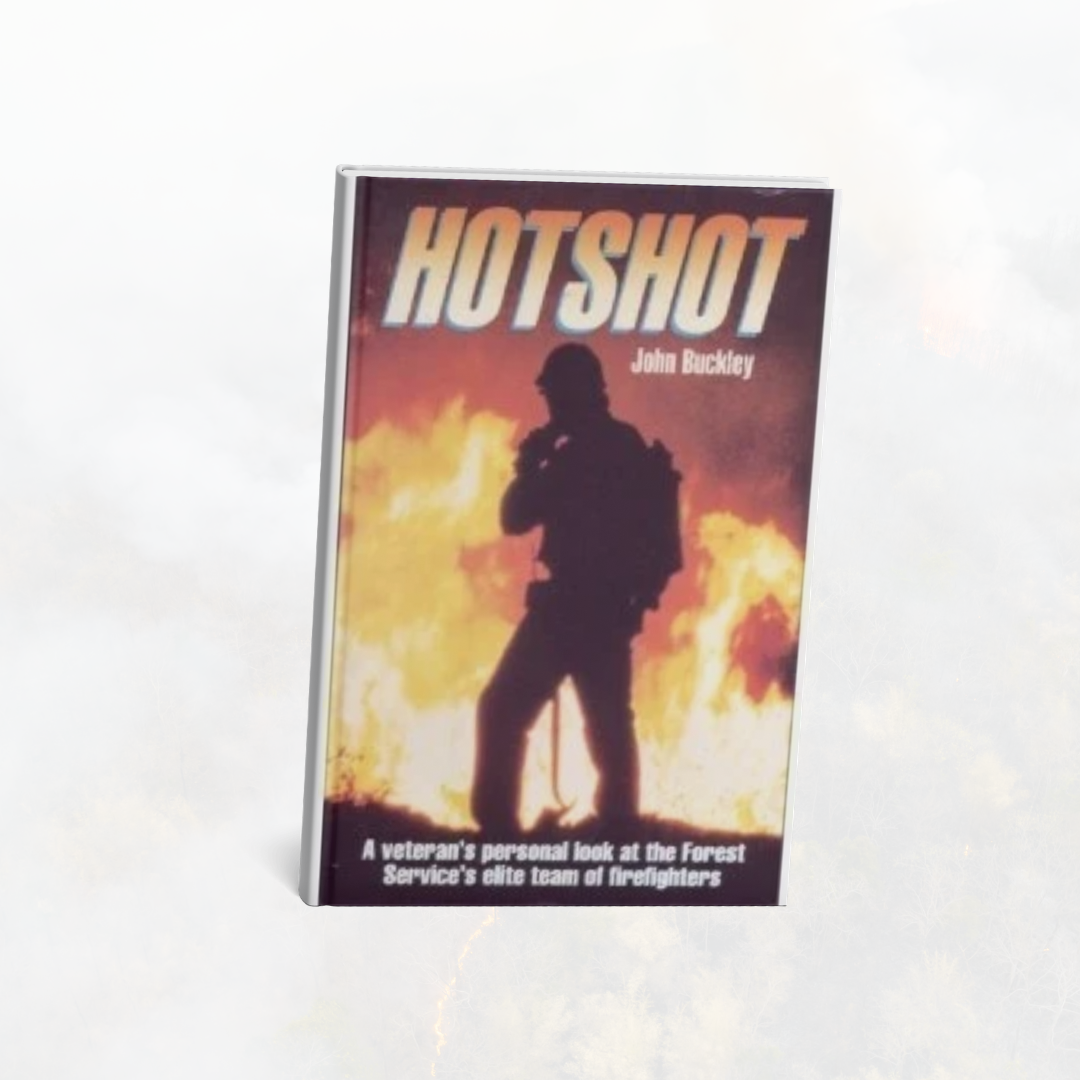
For 13 years I worked in fire, most of those years on the Stanislaus Hotshots. From being a young firefighter with only a couple of years of firefighting experience to eventually playing a key role in training firefighters to lean the complexities of fire behavior and fire weather — I was fortunate to travel to wildfires from coast to coast. When wind-driven firestorms are roaring up mountainsides or creating their own pyro-cumulus cloud that rises miles high into the air, the rush of being in such extreme conditions is beyond words.
Sharing the challenge of cutting line on major fires or struggling all night through rugged terrain with fellow firefighters creates a bond and a sense of achievement in being capable of using chainsaws and hand tools to eventually contain the out-of-control flames.
Since leaving the Forest Service I’ve worked for a non-profit conservation organization that is intensely engaged in supporting fuel reduction, broadcast burning, strategically placed area treatments, and protection for communities with wildland urban interface.
Excerpted from Hotshot by John Buckley Publication date: January 1, 1990. Shared with written permission from John Buckley.