
The Burn: A Female Hotshot’s Fireline Story from the California Sierras
Here’s a selection from Kate Hamberger’s award-winning memoir, Dances with Fire, Chapter 17, The Burn. It describes her internal struggle to complete a task at a fire in the California Sierras when she worked with the Horseshoe Meadow Hotshots in 1989.
by: Kate Hamberger
We had started our night shift at the Balch Fire a few hours earlier, when I noticed I was feeling a bit off. I had a headache and my shoulders were tight and burning. A couple of ibuprofens and some black coffee would help, not that I had either of those things. We were all breathing heavily from hiking to the top of a monster hill. We listened as the boss instructed us to punch in a section of line to tie in with the crew above and below us and then install a hose line so we could blackline it later in the night. Piles of rolled hose waited to be laid and connected along the line before we could start the burn.
Thirstier than usual, I swallowed the last of the water in my first canteen as I listened. Blood pounded in my head and it was taking forever for my heart rate to slow. I was wondering if there was any Gatorade in my pack when I heard Rod ask for a volunteer. He needed someone to hike back to the bottom of the steep hill to pick up our midnight meals and carry them back up to the crew. No one offered. I saw him looking to choose someone.
Not me. Not me. Please don’t pick me. I tried to make myself shorter and leaned in to hide behind the guy in front of me. Like when my math teacher was choosing someone to do a long division problem on the chalkboard.
“Hamberger! You’re up!”
I cussed under my breath. Someone gave me a slap on the shoulder in sympathy.
Slamming the empty canteen back into its holster, I tightened the straps on my pack. It was going to be one of those nights. Usually, I could hike down a trail like a mountain goat, but using a headlamp in the dark confused my depth perception. There were big boulders and water bars to step over, and slippery spots of shale to slide on, making the trek more arduous and slower than it would be in daylight, but hiking down the huge hill was the easy part. Getting back up with meals for the 20-person crew was what had me worried.
At the bottom, it was noisy and busy with hotshots, local hand crews, and engine crews coming and going. A heavy blanket of dust and diesel exhaust shrouded the fresh mountain air as big fire trucks idled, bumper-to-bumper along the gravel road. I searched through truck headlights and the engines’ red parking lights having no idea where to find our lunches.
Humoring myself, I smiled to imagine approaching a busy fire official studying his map to say something silly.
Umm, “scuse me. I don’t really care about this massive fire suppression operation. Can you just tell me where my lunch is?”
While standing in the midst of all the activity wondering where to look, a voice called.
“Horseshoe Meadows!”
He must’ve spotted my orange hard hat with a horseshoe emblem. I turned to see a man approaching with a large cardboard box in his arms.
“Here’s your lunches.”
He thrust the box into my arms and walked away. There I stood, with the big box that I could barely see over. Without handles, there was no easy way to carry this awkward burden back up the humungous hill. Weighed down with what seemed an impossible burden, I had a sudden urge to cry, just for a second, before replacing it with grim determination. Pull it together!
Calling on the sisterhood of strong women from around the world, I remembered a photo in National Geographic of a woman in Africa carrying a heavy load on the top of her head. I hoisted the box onto my head and adjusted its position. Once it was nicely balanced on my hard hat, I took some tentative steps. This might be do-able.
Hoping that nobody bumped into me, I started the steep climb for the second time that night. Men passed me carrying heavy rolls of hose under each arm. I could hear them coming up behind me. They were breathing hard; I sounded like a spent racehorse in comparison. It was a wonder that I could hear anything above my own loud breathing. Some of the men passing must have felt sorry for me, because they said things like, “You’re almost there!” even though we both knew I wasn’t. I barely eked out a “Thanks!” or “You too!”
The dirt on the trail had been churned to a fine powder from all the foot traffic. The darkness concealed the dust I sucked into my lungs with each breath, but I could taste it. With burning hamstrings, I tried to encourage myself with the mantra, Slow and steady. But I was not even halfway.
When running on the high school cross-country team, it had seemed like every practice had a hill to run. Coach Bushong subscribed to the idea: “that which doesn’t break you makes you stronger.” I wasn’t a fan of Nietzsche, but if I allowed myself to dwell on the pain for even an instant, I would stop. So, I sang motivating songs in my head like Matthew Wilder’s, “Break My Stride,” and kept moving. One step at a time.
Halfway up, I started to talk to Jesus, asking for an ounce of supernatural strength and energy. Different Bible verses came to mind. There on that mountainside, near midnight, with twenty lunches weighing heavy on my head, I recited Isaiah 40:31:
Those (exhale)
who wait (inhale)
on the Lord (exhale)
Shall renew their strength; (step over the water bar)
They shall mount up (don’t trip on that root)
with wings (beware the loose boulder)
like eagles,
They shall run
And not be weary
They shall walk
And not faint.
Imagining how it would feel to fly with wings of an eagle to the top of this mountain, I felt a lightness of being. This state of reverie lasted until I inhaled a gnat that hit the back of my throat. I coughed, which threatened to upturn my precarious package.
I dared to look up. There was still a third of the mountain to go. Guessing how many steps it would take to crest the ridge, I began to count. In Spanish. Anything to keep my mind off the pain. When that got boring, I guessed at the contents of the lunch sacks. Most likely ham sandwiches, but with packets of real butter? Or would it be that white glop they called margarine? No offense to the ones who worked day and night just to keep us fed, but there’s certain things that don’t belong in a firefighter’s sack lunch. Like packets of mayo! Don’t wanna be sick out here. Stick with the mustard. Fruit? Who’d put a banana in a firefighter’s lunch? Some kind of sick joke! My bet’s an apple. Apples give us Vitamin C, potassium, magnesium, and the fiber we’ll need for the Wonder-bread-with-rainbow-meat sandwiches. Chocolate? Lord, let there be chocolate. M&Ms melt in your mouth, not in your hands. Dr. Pepper is perfectly pristine poured over pulverized ice. Preferably when I’m done panting… perhaps tomorrow…
I could no longer ignore the pain in my neck. My grimace got tighter. Just a few more steps. I tried to hike faster, but the box had to come down. Finally, after a 30-minute climb, I reached the top. I staggered to the far side of the staging area, knelt to my knees, and tipped my head forward. Catching the box in my hands, I set it on a stack of hose.
Taking off my pack, I untucked my sweaty t-shirt to revel in a calm, floating sensation. I sat for a minute to catch my breath and rub my neck. Enjoying my runner’s high, I noticed my headache was gone. I also noticed that the hose line was locked and loaded. From the orange glow of firelight, I could see a cluster of my crewmates not far away and walked over to join them.
They were intent on something. The guy in the center of the group was holding what looked like a white plastic pistol with a wide barrel. They called it a “Very” pistol, a flare gun invented by Edward Wilson Very, a US naval officer. It was used in both world wars to send signals. This flare gun has been adopted by wildland firefighters to ignite fires in heavy fuels and steep terrain.
Crewmembers watched as the guy in the center loaded the single-shot flare gun, aimed high, and fired. With a loud BANG, an explosion of red light arced up into the black void, illuminating the brush below it. It dropped into the brush and WHOOSH! There was fire. It was the easiest way to light a line of fire in a steep section of terrain thick with brush that stood between the fireline and the wildfire.
It was the coolest thing, and everyone wanted a turn shooting. There was almost a party atmosphere while we shot the flares and watched the fires that sprang up on impact just where we wanted them. It was one of those rare moments when everything seemed to cooperate: Light winds were blowing in the right direction, we had a wide fireline, and plenty of water to douse any errant sparks.
“Hey, let me try. I want to shoot it,” I said.
“Nope. Better leave this job to the men.”
My eyebrows shot up in surprise and dismay at such language.
What?!
My retort was swift: “Ah, okay. Good luck finding your lunches I carried all the way up this blasted hill!”
With a growing awareness of prejudice, I turned to walk away in disgust when one of them grabbed my arm.
“Get over here. You get one shot! Aim it to the left about ten feet from the smallest fire.”
I hit it dead on. A great deal of satisfaction can be found in the simple act of pulling the trigger and watching that flare explode into a burst of flames. For a while, we stood watching a line of fire form, listening to the hiss and whistle of burning scrub oak. Sometimes we’d see what we called “fire devils.” Whirling eddies of air combined with combustible gases look like little fire tornadoes with a haunting howl. Mesmerized by the eerie visual effects, I was comforted by the fact that there was water behind us. We watched with satisfaction as the fire progressed in a tidy line up the hill toward our line.
“Wouldn’t it be great if firefighting were this easy all the time?” I asked.
“Yeah, but we’d all be out of a job,” said the nearest crewmate.
“Hey, so where are those lunches, Hamberger? We’re starving!”
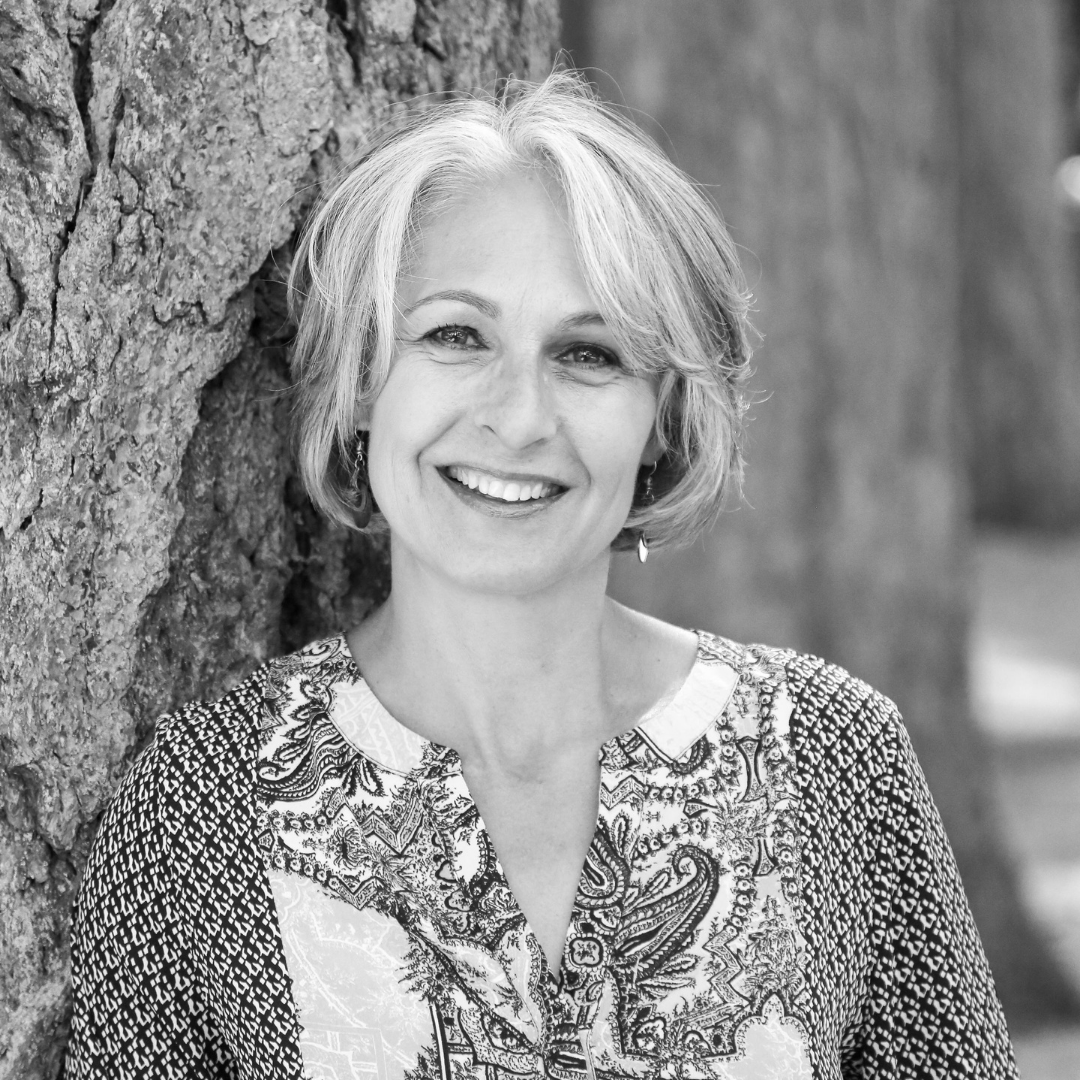
About Kate Hamberger
Old letters and smoke-filled memories turned into chapters to share my adventures as a hotshot in my memoir Dances With Fire. While working as a wildland firefighter in the late ‘80’s and early 90’s, I learned how to do hard things and the importance of camaraderie when fighting wildfire or working in a dangerous or remote environment. Being part of a community, family, or team is important at any age and for any endeavor.
After graduating from the University of Oregon with a BA in Journalism, I taught high school English for 10 years. I realized the importance of story to inspire us to push beyond our comfort zones. I wrote my own story of crossing the threshold into the unknown as an ordinary person faced with extraordinary circumstances.
We have an obligation to care for our planet and our people. When I’m outside, usually with a four-legged friend nearby, I learn things from nature when I pay attention. I’m curious about matters of the heart and challenges for the soul—and love when they’re framed in a good story.
In 2018, I received the Ethel Herr Most Promising New Writer Award. I support the Wildland Firefighters Foundation (WFF), the US Hotshots Association, and am a member of Women Writing the West. I enjoy sharing stories to encourage others and am available for speaking opportunities.
Learn more about Kate by visiting her website here.